








Employee engagement remains one of the biggest challenges for companies, because it is more and more difficult to build. Recent data confirms this. According to the STATE OF THE GLOBAL WORKPLACE 2026 report published by Gallup, employee engagement in Europe stands at just 12%. Romania performs slightly above this average, yet it still remains below its true potential. This tells us one thing clearly: engagement is not a lack of initiatives. It is a lack of system.
Most organizations are already doing things to improve engagement – internal surveys, wellbeing programs, recognition initiatives or team events. And yet, results remain modest because these actions are often isolated. They are not connected to each other and are not integrated into employees’ daily work experience. Engagement does not grow from moments. It grows from consistent experiences. But how to deliver personalized experiences to such a large number of employees? This is where AI comes in.
The conversation about AI in HR is often about automation, about efficiency, about reducing administrative work. But the real value of AI is its ability to create relevance at scale.
In the context of engagement, this means:
- understanding what is happening in the organization in real time
- personalizing the employee experience
- identifying early signals of disengagement
- supporting fair and consistent recognition
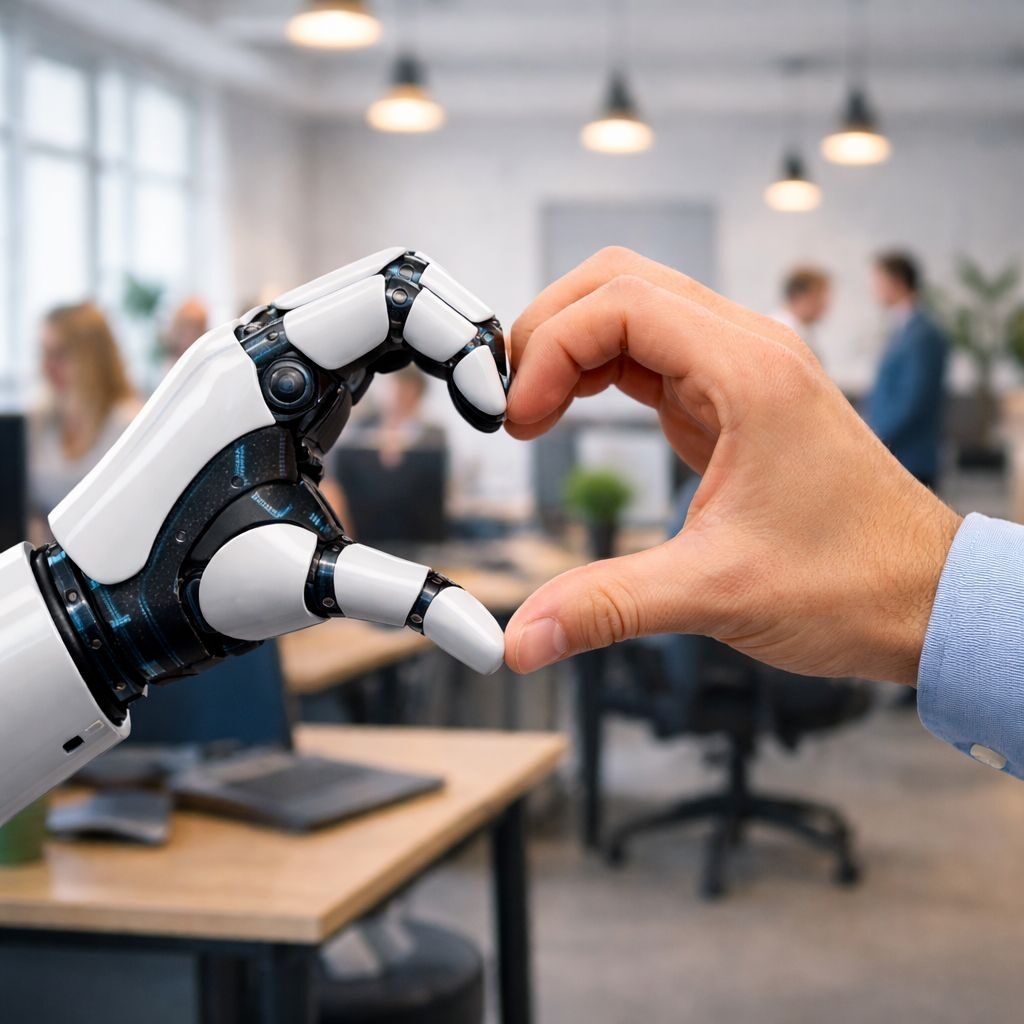
AI does not replace human interaction. It makes it more relevant.
From data to action
One of the biggest issues with engagement is that organizations measure a lot, but act too little. AI changes this by analyzing data from feedback, performance evaluations, internal interactions, and organizational results. AI can generate actionable insights, not just reports. Managers no longer have to guess where problems exist, which teams need support, what type of interventions work. Decisions become data-driven, not perception-driven.
A concrete example: recognition
One of the most powerful drivers of engagement is recognition. And yet, in many organizations, it remains sporadic, subjective, and dependent on managerial initiative. AI can change this by: automatically identifying relevant moments, suggesting recognition actions, ensuring consistency and fairness
The result? Employees are no longer recognized “when it happens.” They are recognized when it matters.
We believe HR needs more than tools. It needs vision. That is why we have integrated AI into the Co-Factor platform where it truly matters: in organizational culture, in employee engagement, in employee recognition. Not as a layer of technology, but as a mechanism that connects objectives, performance, feedback and employee experience. Because engagement is not a metric.
It is the result of a system that works.
Of course, AI will not solve engagement on its own. But it makes possible what was previously difficult to sustain consistency, personalization, relevance, and speed of response.
If you want to see how AI can support real engagement in your organization, request a personalized DEMO right now.